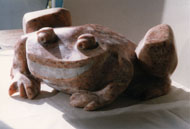
My journey in stone by Ben Kimura
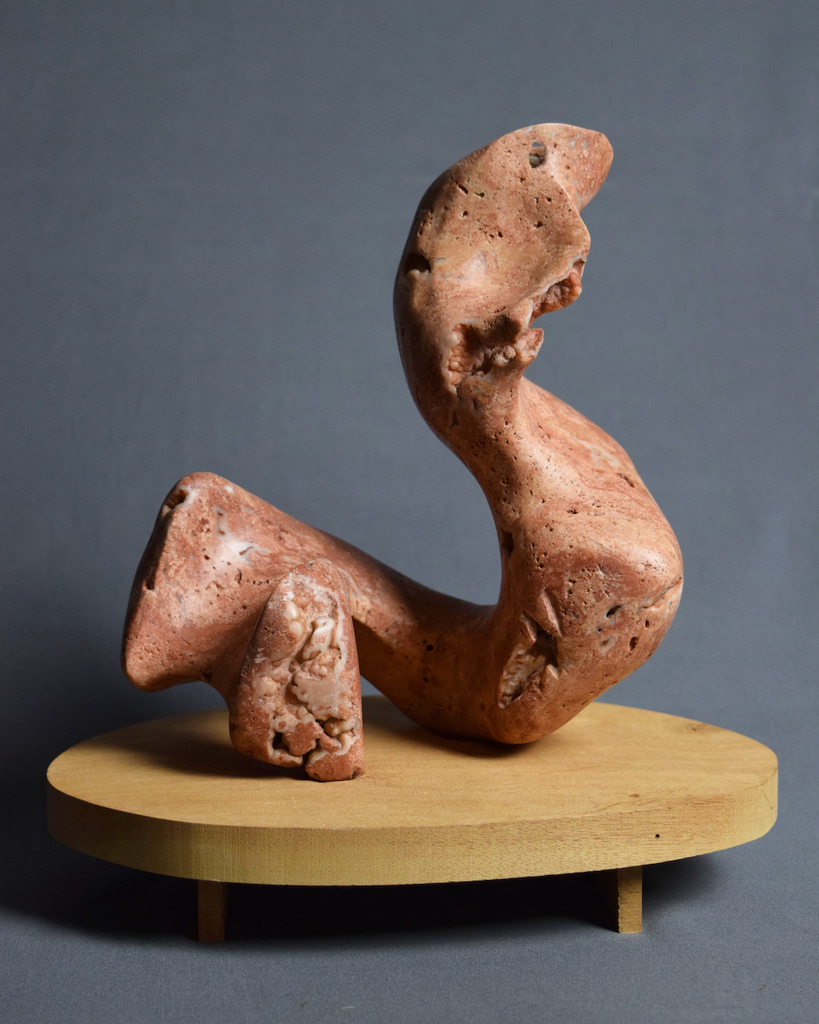
Carrara Marble: Florence, Italy
Prior to carving my first piece of stone, my only experience with reductive sculpture came from carving plaster in a college class. Even from that assignment, reducing an object into a form made immediate sense to me. I grew up in Seattle surrounded by world-class blown glass artists and was mentored by Paul Marioni, a cornerstone of Seattle’s studio glass movement. We spent many afternoons drawing and studying the incredible art collection in his studio apartment.
I have a distinct memory of my classmates having to physically pull me out of the room as I tried to finish sketching Bernini’s Apollo and Daphne in the Galleria Borghese.
My first foray into reductive art was through an intro to 3D design class at Colorado College carving a block of plaster. Very quickly the process of reductive sculpture made a lot of sense to me. Before long, I had carved three iterations of a form and was hooked on reductive sculpture.
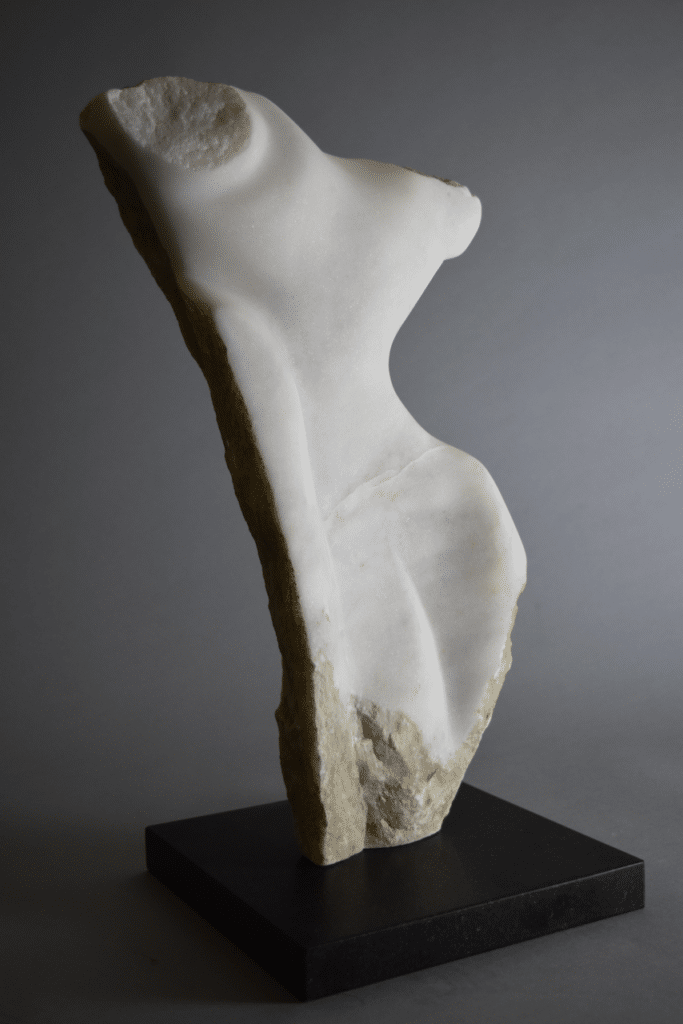
In Italy, there were rocks everywhere to look at, and it was eye-opening to be surrounded by the world’s most wonderful figurative marble sculptures.
While in Florence, Italy I had the opportunity to carve a piece of the local stone: a discarded chunk of Carrara Marble laying beside a tree in the garden of the art studio annex. I made a maquette of the form that I wanted to create and would be possible with the stone at hand. Professor Marco Fallani introduced me to the tools: “This is a chisel; this is a hammer; this is a grinder, and this is how you make a fret cut.” With those instructions, I was absolutely hooked. Working evenings in the back of the studio was a dreamy experience, and I’ve continued to enjoy working in the evenings to this day, often switching off the air compressor long after dark.
Colorado Yule Marble: Marble/Marble Symposium
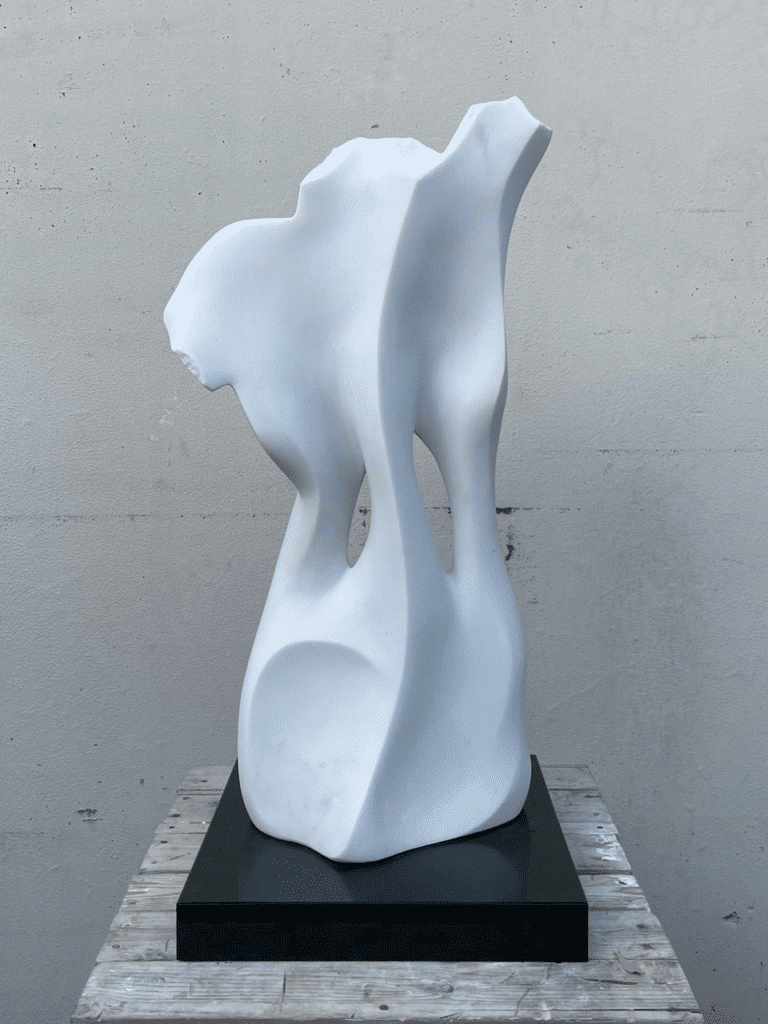
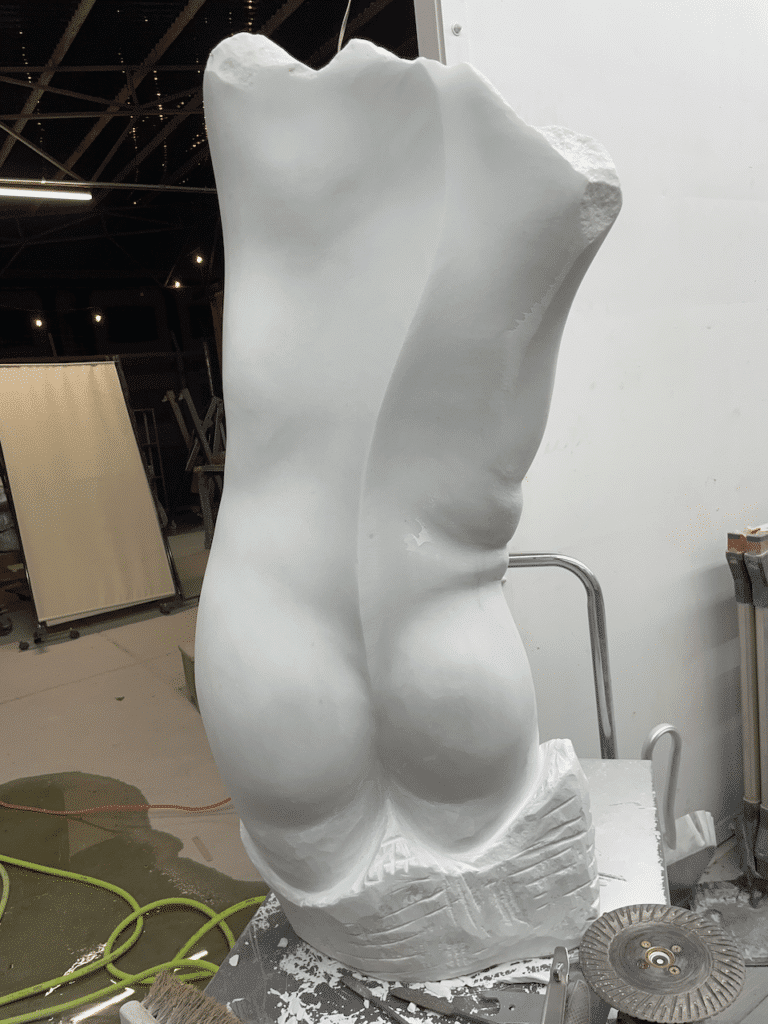
Brilliant white and full of personality, Yule marble is unlike any other marble. While less homogeneous than Italian marble, it breaks and forms with distinct character, often creating stretched forms and large triangles. If carved correctly, it is exceptionally strong; however, carving the stone against its bedding plane can lead to heartbreak.
High in the Colorado mountains, the carving oasis of Marble/Marble was a dream: a community of passionate people carving local stone together. I met Madeline Wiener, who encouraged me to carve without fear. I learned from masters of the craft that removing material isn’t the hardest part—the truly difficult part is how one’s vision and design works in tandem with what the stone wants. Working in Yule marble allowed me to explore both abstract and figurative forms at a larger scale than I had worked with previously, letting the stone inform the design.
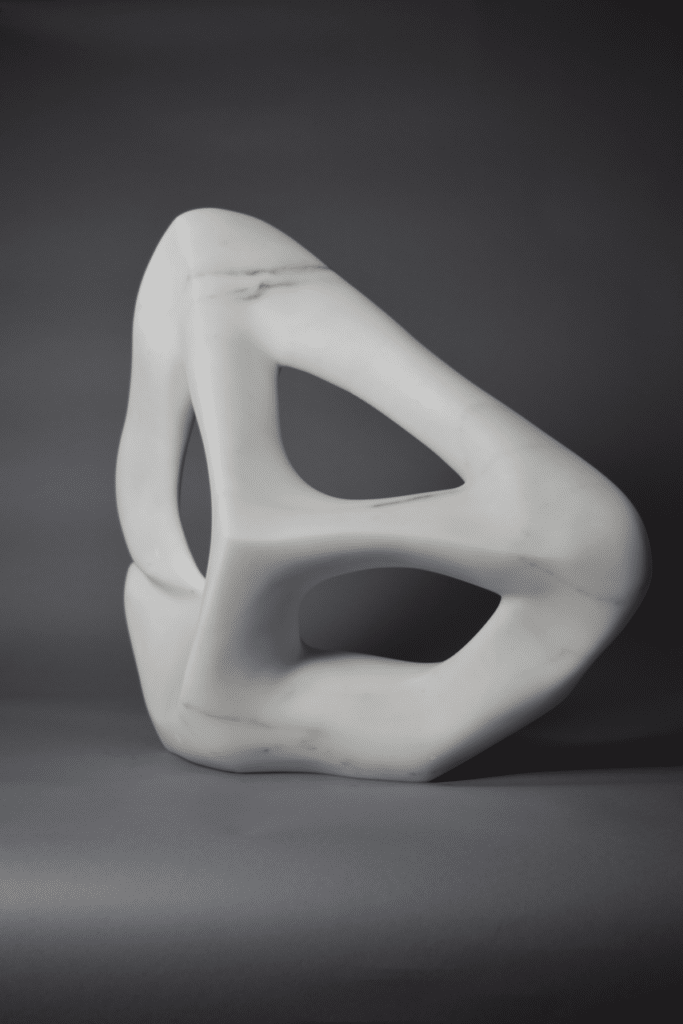
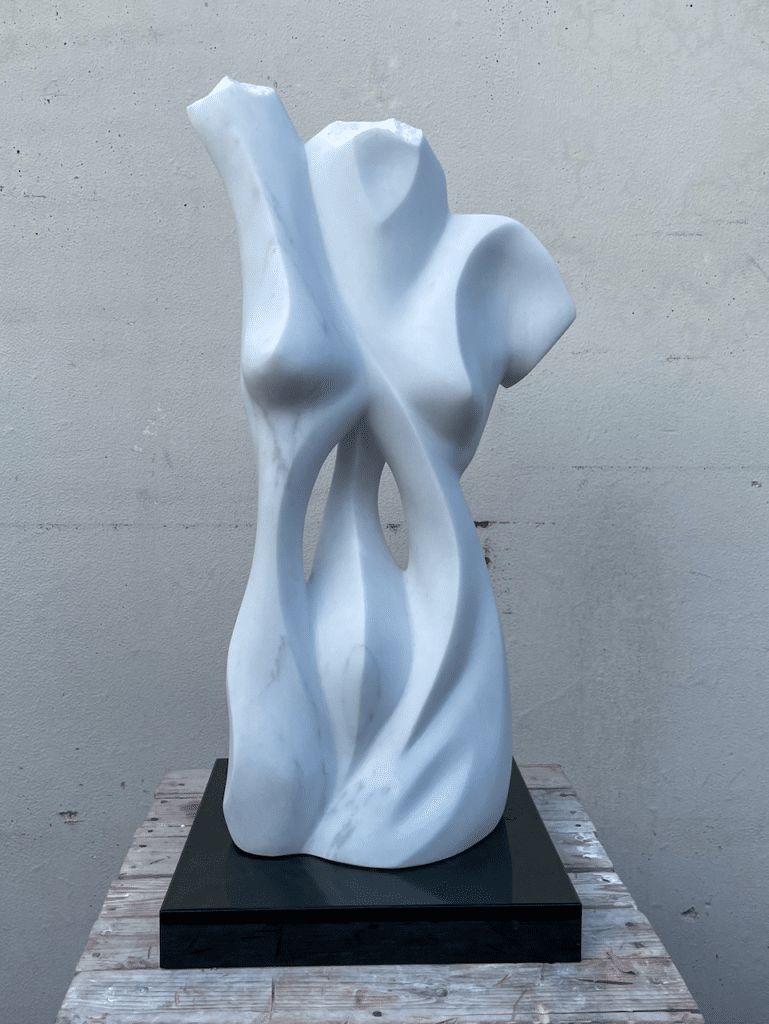
Persian Travertine, Raspberry Alabaster, and Kansas Limestone: Colorado Springs
As a studio art major at Colorado College, I decided I was a stone sculptor. I expanded my range—travertine, alabaster, and limestone were all crucial materials for becoming more familiar with the tools and I tried to carve as many rocks as I could get my hands on. With the more expressive rocks, I attempted to carve abstract forms that highlighted and honored the material; with limestone, I found deep satisfaction carving figurative heads. I also connected with Sedalia, CO sculptor Frank Swanson, who would trade a case of Modelo Negra beer for as many Limestone cutoffs as I wanted, and on more than one occasion, my car suffered from being loaded to the gills with limestone for my studio mates and me.
Dunite & Harder Stones: Washington (my home and where I am still growing up)
After graduating and moving home to Seattle in the summer of 2016, by chance, my mom, Pua, spotted an article in The Seattle Times about an NWSSA pop-up show in Volunteer Park, just a few minute’s walk from my house. That serendipitous notice introduced me to the NWSSA and what would become my true stone carving community.
At the Camp Brotherhood symposium, I watched in awe as Senden Blackwood transformed an enormous block of dunite into a finished sculpture in just a week. Seeing him use every tool at his disposal dissolved my fear of stones not traditionally labeled “carving stones.” Materials I once assumed were too hard became favorites: dunite, an intense green ultramafic rock with an extraordinary rind, was a local treasure and made all the sweeter because it came from a regional quarry.
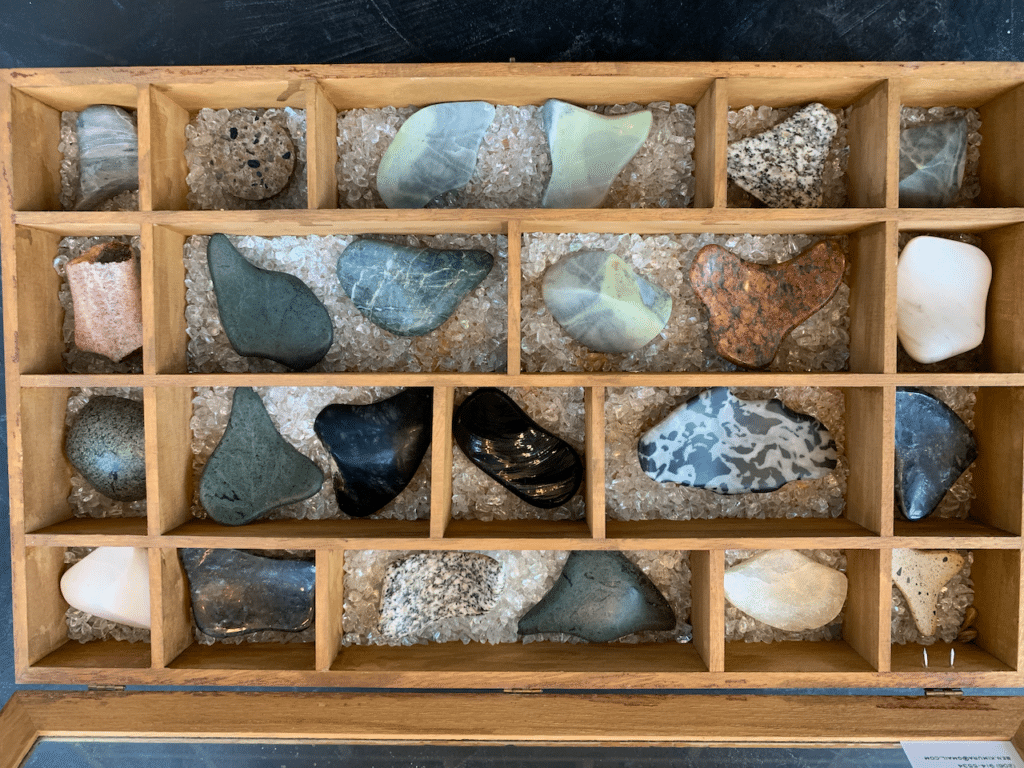
I began carving small forms that fit comfortably in the hand: my pocket stones. These pieces taught me how different rocks behave under tools. Is it chippy and brittle? Does it cut like butter under an angle grinder? Does it hold a crisp line, and how does it take a polish? Every lesson directly informed how I approached larger blocks.
Oregon Basalt, Granite, & Marble: OR International Symposium, Suttle Lake OR
A passerby carrying an Oregon basalt column walked through the symposium field and offered it to me. It had a striking white rind formed by petrified volcanic ash, but the interior stone was a pure matte black. The challenge of this sculpture was finding a way to carve the stone while still highlighting the original rock, which was beautiful even without any work done to it.
Because the late sculptor Kazutaka Uchida instructed at Marble/marble and the NWSSA Oregon symposium at Suttle Lake, near Sisters, OR, I formed a relationship and had the privilege of driving his sculptures between CO and OR each year; his mentorship sharpened my understanding of what worked sculpturally and what didn’t. When I attended the Oregon symposium for the first time, I was engulfed with the quiet focus and intensity of the community of the stone sculptors in Oregon and the inspiration and ideas that came with it.
The Stoneyard: Seattle Studio in Georgetown
It’s so important to me to have a peaceful place to carve stones, especially in the evenings, and in 2022 I was part of a group of NWSSA sculptors who founded a studio at the Equinox Studios complex in Georgetown, WA. It’s been so wonderful to have a space to carve and truly make my own. Now it’s filled with so many rocks–including an 1,100-pound granite boulder that I can’t wait to carve.
Ben Kimura is a stone sculptor and NWSSA member based in Seattle, Washington. A graduate of Colorado College with a degree in Studio Art, he co-founded The Stoneyard collaborative carving space at Equinox Studios in Georgetown, where he continues to explore both native and exotic stone varieties late into the evening.
KIMUROCKS.com
Instagram: @kimurocks
TikTok: @kimurocks.sculptor