
By Jeremy Kester

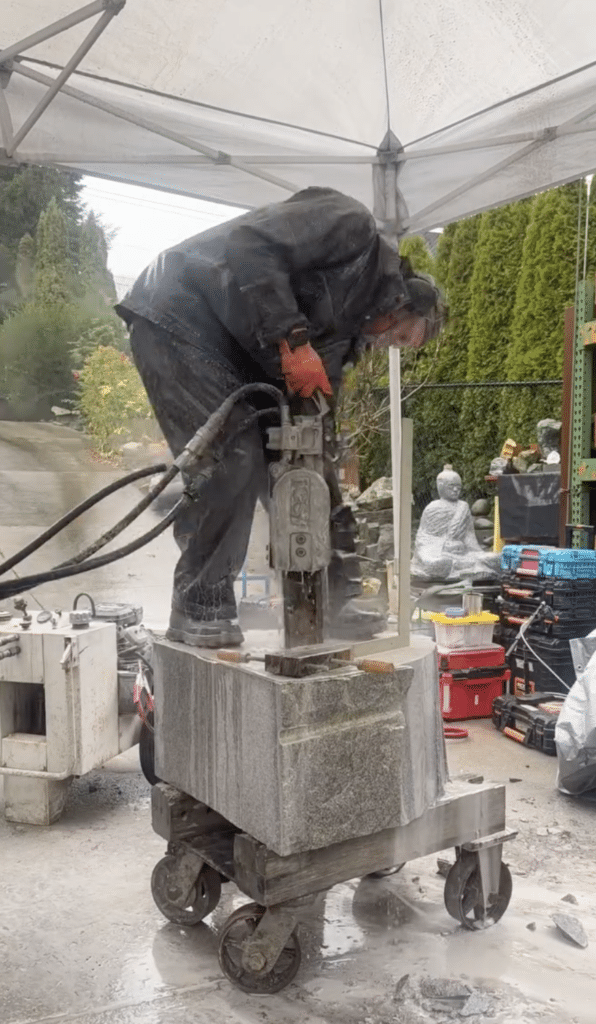
Sculpting the stone is the easy part. Constructing the time and space and equipment and opportunity to sculpt is the challenge.
My first sculpture mentor very early on said “today we learn to weld”. I was not interested in welding at the time. I expressed my desire to focus exclusively on stone and was promptly told “If you want to sculpt stone you will need to know how to weld”.
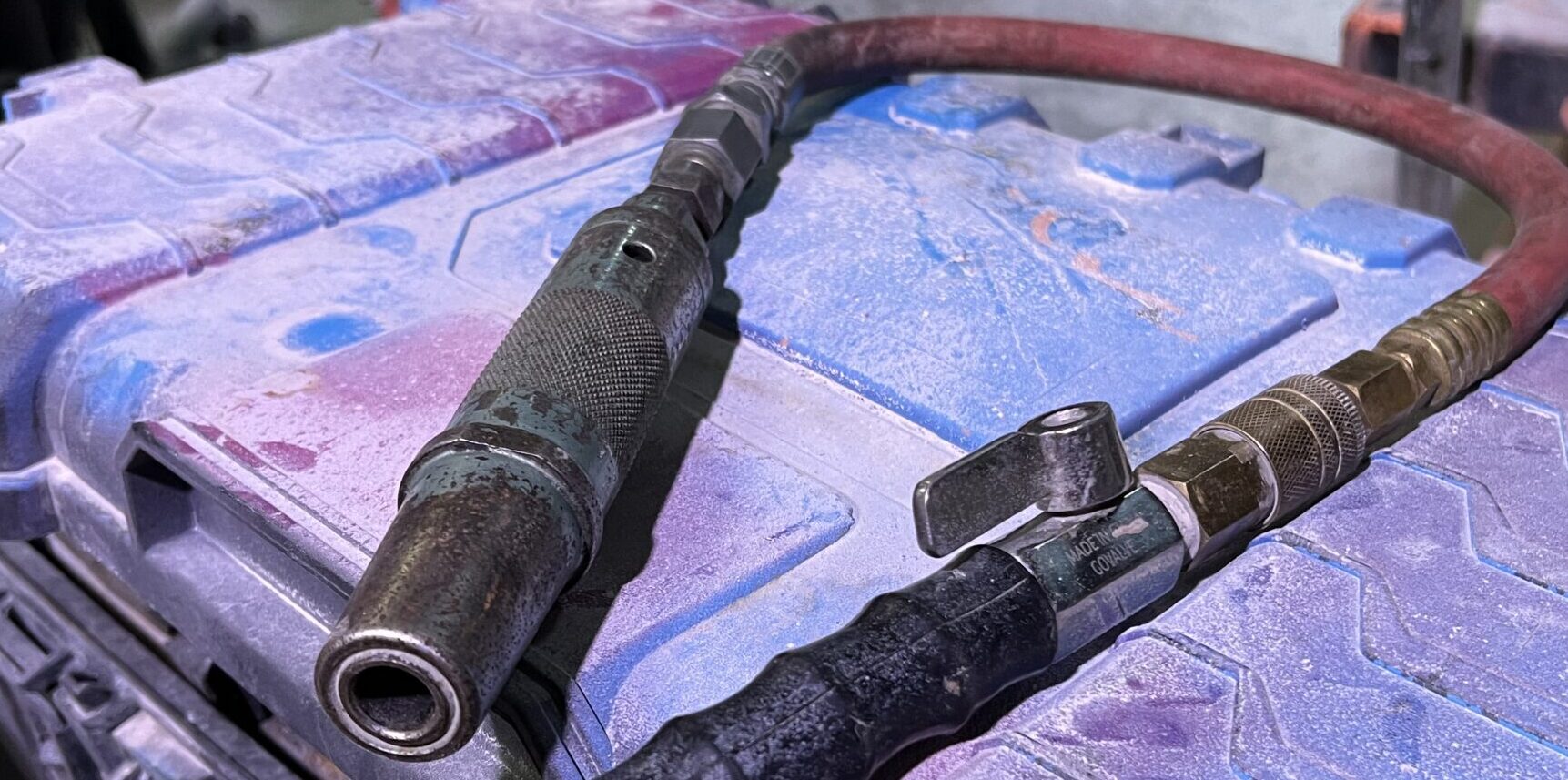
As it turned out, not only was he right about the welding, I would also need to know how to operate cranes and lifts. How to maintain and troubleshoot hydraulic, pneumatic, and electrical equipment and systems. How to disassemble, repair, and modify tools. I would need to learn to interpret the meaning of harmonic oscillations emanating from big scary machines. I would need to own a truck that is way too big to park anywhere easily and struggle to quench its never-ending thirst for dinosaur fluids.
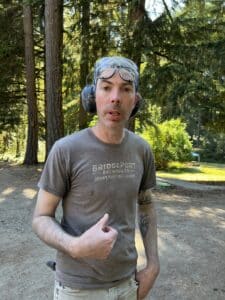
It so often seems that sculpting stone on a large-scale is not so much creating art as it is plumbing, maintenance, aggressive janitorial work and looking for that last pair of safety glasses clean enough to see through. Where did I set them down last? Oh, there’s two pairs on my head.
There’s a common perception I encounter when asked what I do–that being a sculptor is this wonderful romantic dream and “how nice it must be to do something creative for a living.” It is a gift to have the opportunity to pursue a passion but the reality of it is also mostly dirty, frustrating, dangerous, uncomfortable and painful.
I have developed relationships with deep pits of stone slurry intimate enough to make girlfriends jealous. I have grown too comfortable allowing others with filthy calloused hands to deftly pluck chips of stone from my eyeballs. When your proctologist asks you what you do for a living and then chooses to perform a respiratory exam before reaching for the gloves and lube, it will certainly make you question your life decisions.
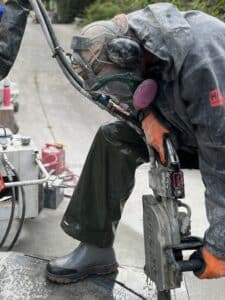 For every one thing I’ve learned about sculptural aesthetics, or philosophy, or the movement of light, I have learned ten about the basic mechanics of our physical world and community. And, that is a good ratio if you ask me. This practice has taught me so many useful skills that I never would have considered pursuing otherwise. I am a curious person with a severe case of idle hand syndrome and the world can rest easy knowing that my hands are so constantly busy solving every problem that these rocks put in front of me that I simply can’t find the time to start a new-age crystal powered death cult.
Despite the never-ending challenges, I am in love with sculpting big hard stones for so many reasons but it is primarily because sculpting this way is more like being a professional fighter than a traditional fine artist. The actual practice of it is miserable and bad for your health but the endorphin rush and sense of accomplishment when you win a major fight is intoxicating despite the busted knuckles. If it weren’t the most difficult thing it wouldn’t be so gratifying.
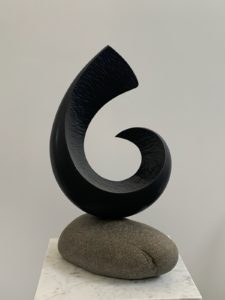
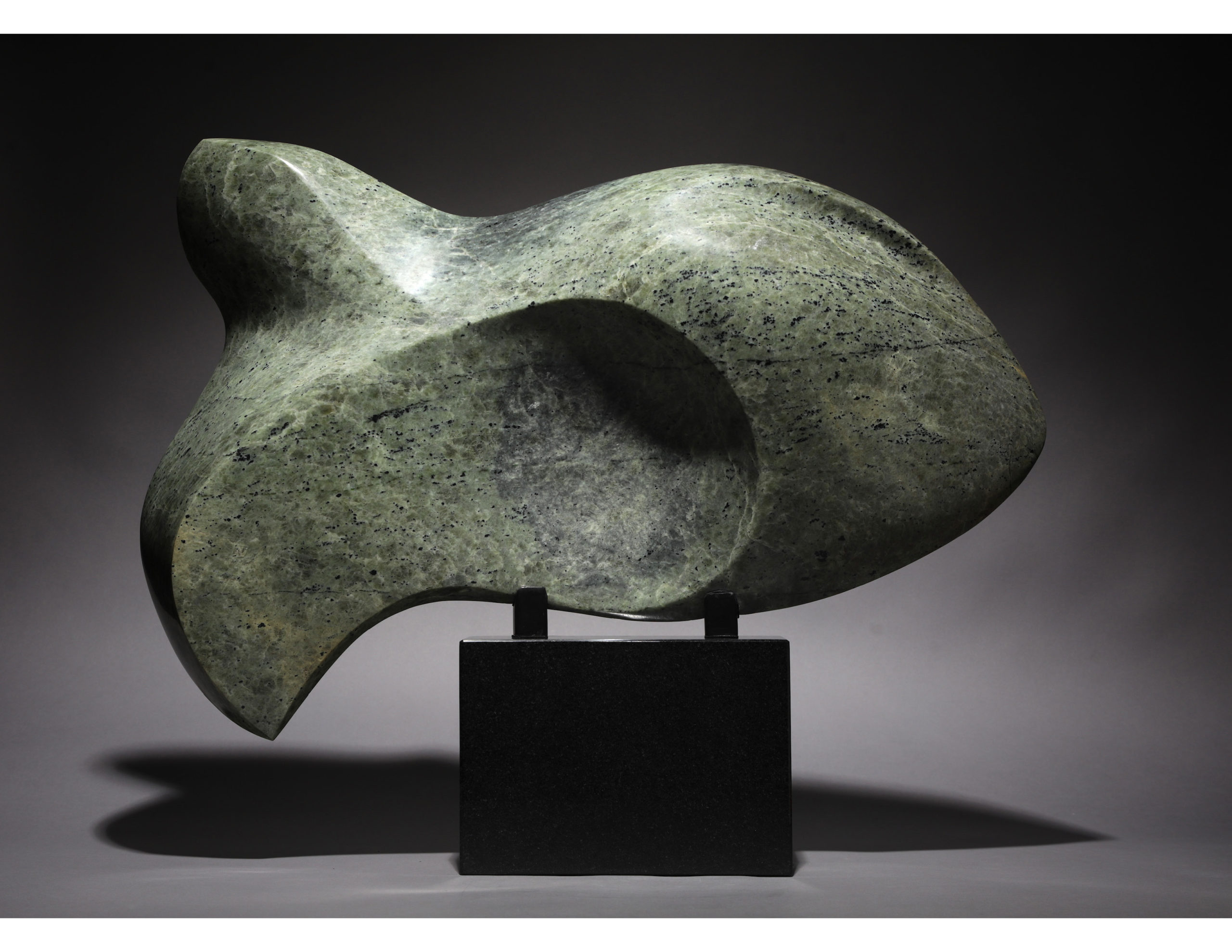
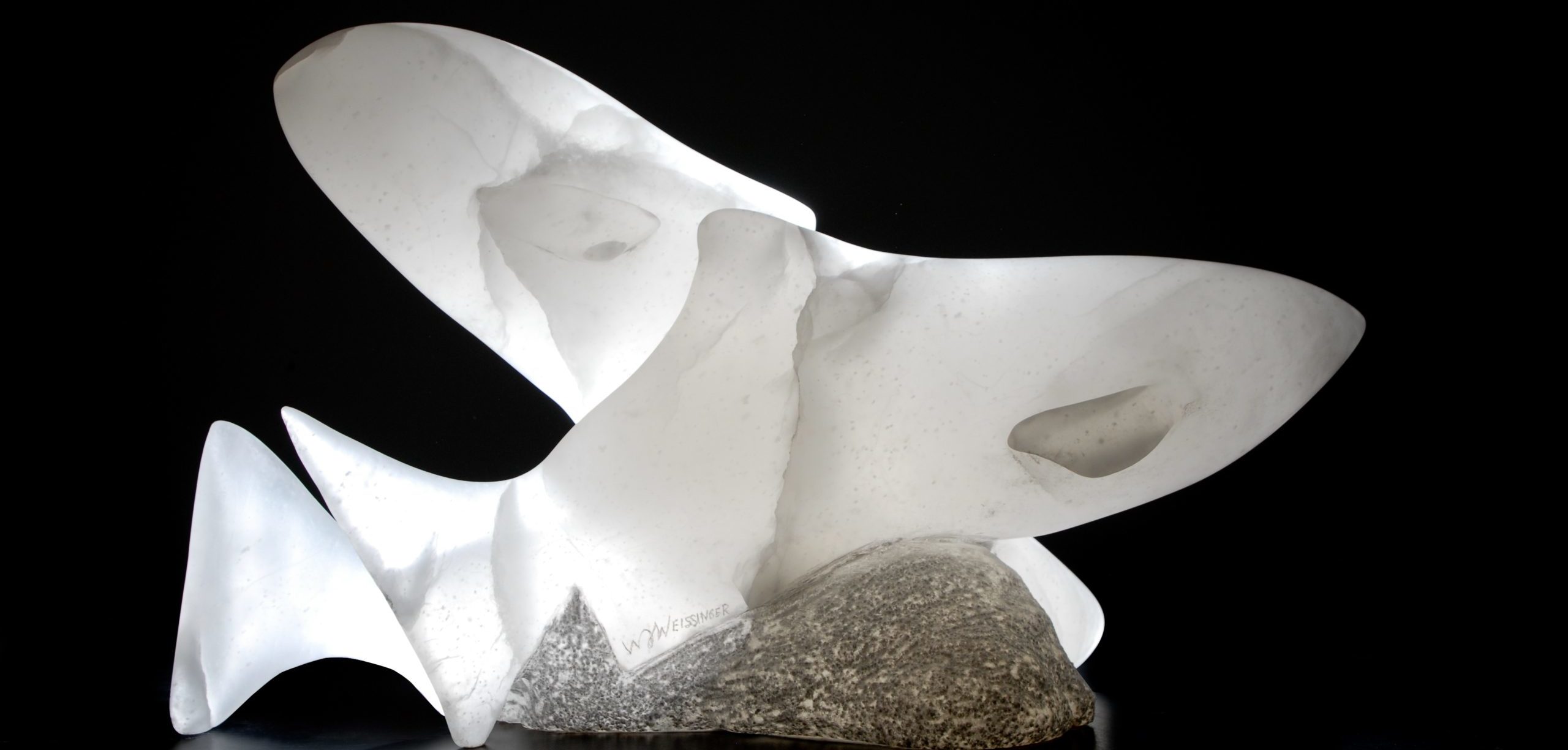
Jeremy Kester is a Pacific Northwest sculptor who draws inspiration from gravity, space, and the void. His work is characterized by clean, fluid lines and textural contrast. Currently honing his craft alongside master stone carvers in Japan, his work has recently been exhibited at Washington’s Schack Art Center, Matzke Fine Art, and Art at the Cave. Explore his stone sculpture portfolio at kesterstonecarver.com.