By Leah Davidson
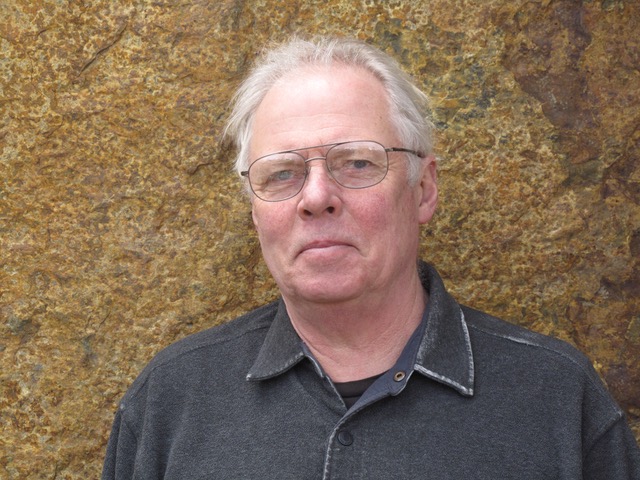
For decades, Pat Barton has been the quiet, steady force keeping our symposiums running and our community safe. He is the pragmatic problem-solver who has trained generations of work studies, engineered and taught us how to build the pedestals we rely on, and led the safety meetings that ensure we all go home with our fingers intact. But beyond the field logistics, Pat is a prolific carver with deep roots in geology, lapidary, and construction.
After years of watching him support everyone else, we sat down to turn the spotlight on him and learn a little more about the man behind the safety glasses.
Leah Davidson: Let’s start at the beginning. How did you first get into stone carving?
Pat Barton: When I was in high school, my sister-in-law was living with us. She was studying with a commercial lapidary person who had a shop in the Rainier Valley in Seattle. She invited me to come along and paid the fee, and that’s how I started doing lapidary. Later in college, I got a degree in geology—but off in the real world, there were very few jobs for geologists in 1972. I continued doing lapidary off and on for years. I probably made my first sculpture in hard stone around 1995, and then eventually found this group.
Leah: What’s the story there? How did you end up finding NWSSA?
Pat: I saw a newspaper ad or heard it on the radio in 2008. I went up and visited the symposium for a day, met Carl Huffbauer, and they bought me lunch. I came back the next year, and that was it.
Leah: You have an incredible wealth of knowledge about what we do at camp. You’ve supplied us, taught us how to build pedestals, and you run our safety meetings. Where does all that technical expertise come from?
Pat: I grew up out in the country on a dairy farm where you constantly had mechanical things you had to deal with. For my real job, I worked for Manson Construction doing marine construction. Prior to that, I spent 25 years on Lake Washington building little piers and rockeries. I also lived in Roslyn for five years and worked at a cast iron foundry pouring manhole covers. So, I have a lot of experience with problem-solving.
When I first showed up at Camp Brotherhood, I looked around and there were dust clouds everywhere. Very few people were concerned about it, and they never had a safety meeting. In my work life, along with being a foreman and supervisor, I was a safety person. I was amazed at the lack of it, so I put a safety meeting together.
Leah: And the pedestals? You’ve completely changed how we display our work.
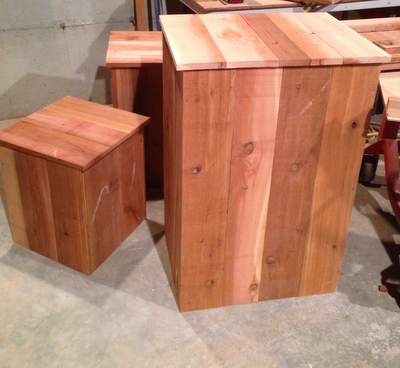
Pat: Back then, they didn’t have very many bankers, so I made a bunch for the field. The pedestals they had were these white things made out of chipboard that had been rained on and swollen up, plus a few crisscross ones made from OSB board painted an ugly green. I made 30 new pedestals. Carl Nelson helped refine the designs, and we created electronic files and printable material that are still on the website today.
Leah: You are heavily involved in working with really hard, beautiful petrified wood that people often covet. What is your relationship with that material?
Pat: I purchased 1,700 pounds of petrified wood—about 25 pieces—from a young guy whose grandfather ran a rock crusher in the 1960s, putting freeways through Eastern Washington. The grandfather high-graded chunks of petrified wood before it became gravel.
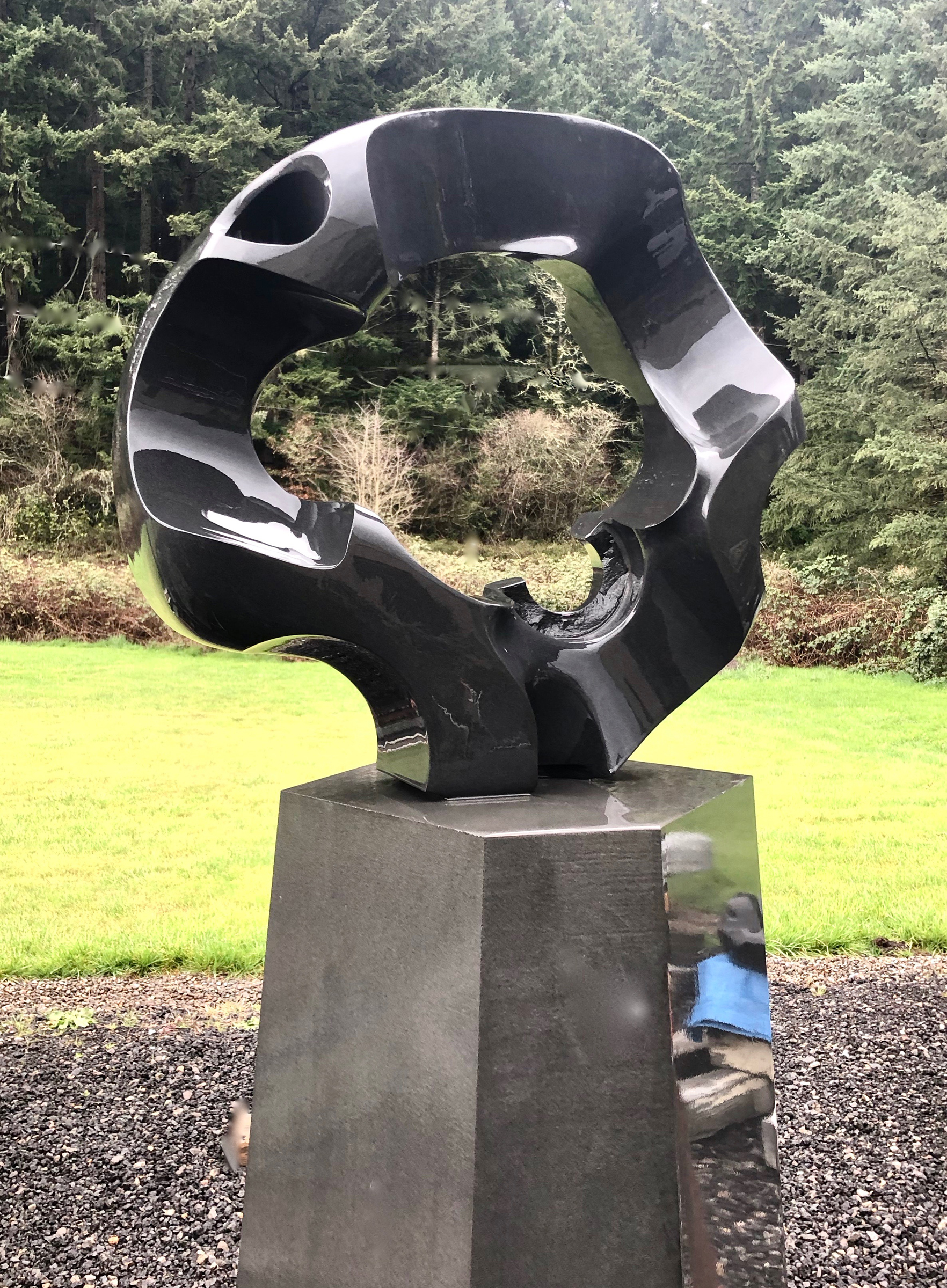
When I design, I try to make the pieces sculptural, but I also like to leave the natural elements. Sometimes that just means polishing and sanding away the distractions. Part of the reason I work with it is that rockhounds love to collect petrified wood, put it in a slab saw, cut it into quarter-inch slabs, and throw them in a five-gallon bucket. When they pass away, those slabs are still sitting in slimy water in a bucket. I look at carving petrified wood as saving it from that fate. I feel strongly about that.
Leah: You’ve been volunteering and running things behind the scenes for years. What keeps you coming back to help the association?
Pat: In this group, or any group, there are talkers and there are doers. It’s nice to be a doer.
Leah: If you had the ear of every member reading the journal right now, what advice would you give them?
Pat: Retire early. And, if you can, donate a little time to the group. I’d also tell people to get involved earlier.
Leah: You also talk a lot to members about the value of making and selling smaller pieces. Why is that so important to you?
Pat: Before I retired, I started making little planters and vases with a friend and selling them at the Issaquah Farmers Market. Selling those paid for all my tools—big saws and everything. But more importantly, you become part of a community. I used to be quite timid about talking to the public, and doing those markets made me much more open.
I’ve been preaching this at our little shows. Selling something is probably the ultimate compliment. Somebody buys your piece, and they are truly complimenting your work. Before I retired, I was working as a superintendent on the Thea Foss Waterway cleanup—a $75 million, three-year job working 12-hour days, six days a week. One weekend, I took time off and sold $1,000 worth of planters.
When I came back, this mouthy engineer asked me, “You’re working 12-hour days, six days a week. Why the hell did you go sell knickknacks over the weekend?” I looked at him and said, “When was the last time you had a thousand people compliment your work in one day?”
Pat Barton is a retired marine construction superintendent, geologist, and indispensable NWSSA member who has engineered field equipment and led symposium safety for over a decade. Drawing on his lapidary roots, his sculptural practice focuses on hard stone, with a special passion for preserving and carving the natural forms of Eastern Washington petrified wood.